


By Tomislav Zlatić, BPB founder, testing free plugins since 2009. Published: . See how I test.
IVGI by Klanghelm is the best free saturation plugin in 2026. It is more versatile than Softube’s Saturation Knob, covering everything from subtle mix-bus warmth to dense distortion on a single track, and it is easier to install, with no account and no license manager getting in the way.
That said, if you want a one-knob workflow and instant grit, take Saturation Knob. For vocals, go for IVGI or LA-210. And if you’re reaching for tape saturation, try FerricTDS mkIII on Windows or CHOW Tape on any system.
The best free saturation VST plugins
- Best overall: IVGI
- One knob, instant grit: Saturation Knob
- Tape compression on Windows: FerricTDS mkIII
- Tube preamp with dry/wet: Phoenix LT
- Detailed tape machine: CHOW Tape
- Odd and even harmonics: GSatPlus
- Saturating one frequency range: T-Saturator
- Subtle glue on Windows: TesslaPRO mkIV
- Open-source tape: ToTape9
- Tube drive for drums: Tube Saturator Vintage
- Tube grit and overdrive: Tube Amp
- Vintage vocal color: LA-210
- Cassette color: Tape Cassette 2
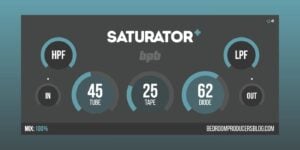
- Tube, tape, and diode in one: BPB Saturator Plus
IVGI by Klanghelm
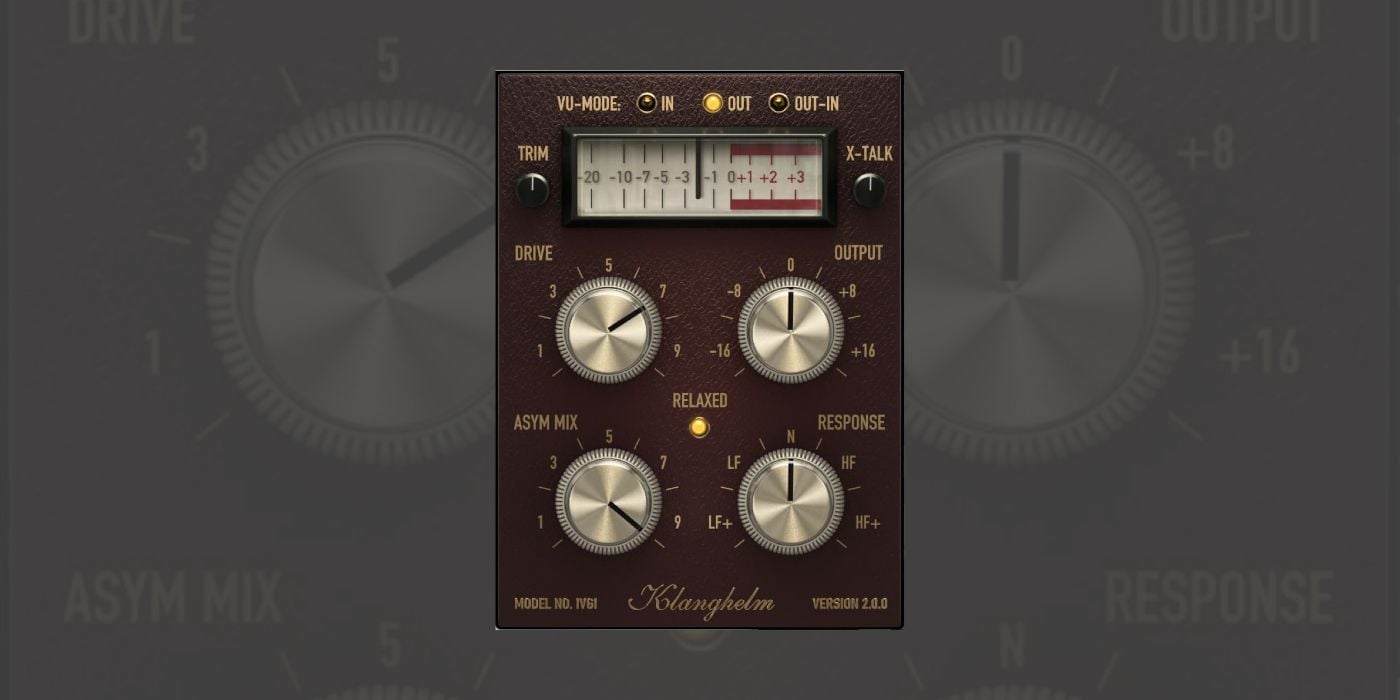
If you only install one plugin from this list, make it IVGI. It has been my favorite free saturator for years, and it covers everything from subtle saturation on the master bus through to crunchy distortion on a single track.
IVGI reacts dynamically to the input level, and its modeled fluctuations (what Klanghelm calls controlled randomness) also change with the drive setting. Klanghelm says IVGI’s base sound is comparable to the DESK mode of its paid SDRR, and it calls the two plugins twins separated at birth.
The layout consists of four main knobs and two small trims. DRIVE sets the saturation level, and OUTPUT sets the output level. ASYM MIX runs from symmetric (a strongly compressing character) to asymmetric (more transparent), and it is a symmetry control, not a dry/wet mix.
RESPONSE tilts the saturation toward the lows for a low bump with a gentle high cut, or toward the highs for tape-like warmth or smooth de-essing. TRIM sets the input so the meter sits around 0 dB, X-TALK sets the modeled stereo crosstalk, and RELAXED engages a gentler variation of the original algorithm.
The VU meter offers IN, OUT, and OUT-IN modes, calibrated to 0 VU = -18 dBFS. OUT-IN shows the level difference, so matching levels means turning OUTPUT until the needle returns to 0.
I usually set TRIM first, then add DRIVE, then compensate with OUTPUT. On the mix bus, IVGI adds density and glue while preserving dynamics, and it works best in small amounts, with low DRIVE, ASYM MIX turned up, and RELAXED on. On vocals, gentle drive with RESPONSE toward HF smooths the top almost like soft de-essing, and on bass, RESPONSE toward LF adds low-end warmth.
What I don’t like is the missing dry/wet knob, so parallel saturation needs a send or a duplicate track. That aside, this is the plugin to learn saturation on, and I’ve been recommending it since 2013.
Runs on: Windows, macOS (VST, VST3, AU, AAX)
What is free: the full plugin; no account or license key
Download: IVGI
Saturation Knob by Softube
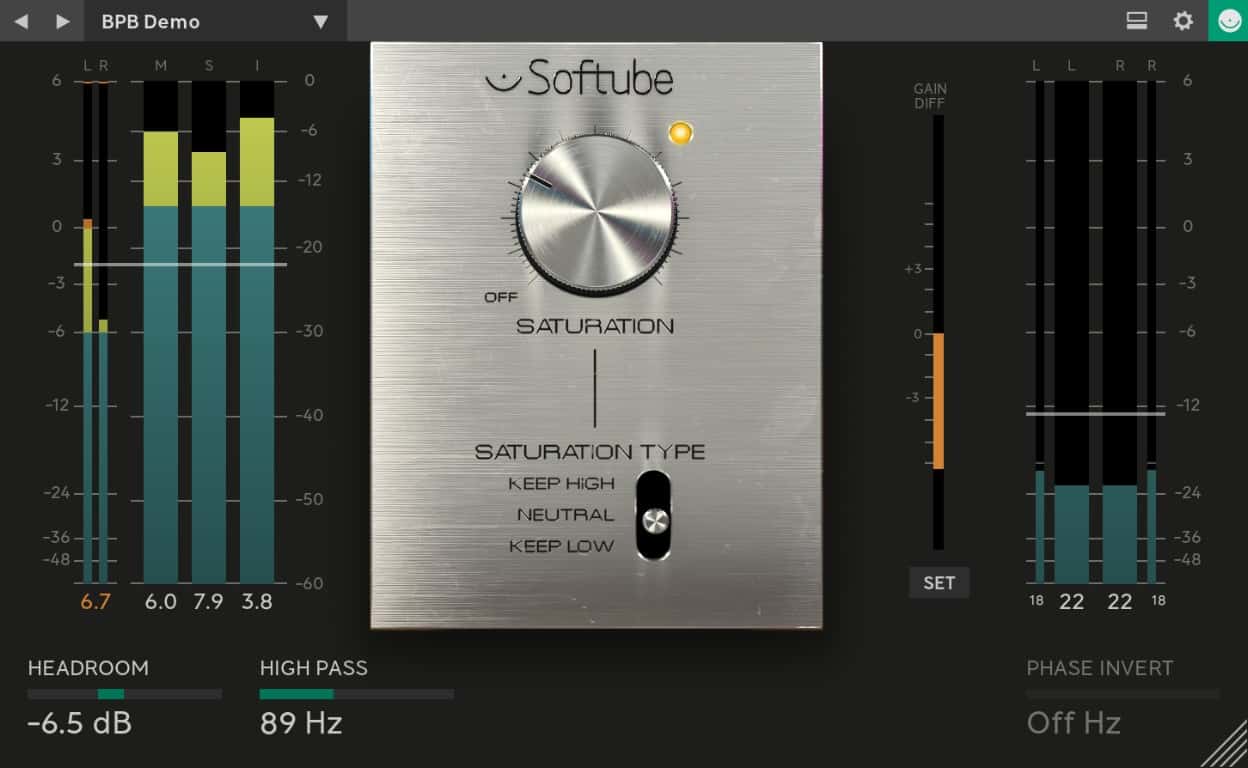
Saturation Knob keeps things to one big knob and a three-way switch, and that simplicity is why it earns its place. It is the fastest route to grit on this list; it sounds good, and it is very hard to misuse.
The switch lets you pick what part of the signal survives the drive. Keep Low leaves the low end fairly intact, so you can squash a drum loop while the kick punches through. Keep High distorts the lows more and keeps the highs relatively clean, and Neutral sits in between. I like Keep Low on bass and drum loops and Keep High or Neutral on vocals.
When pushed hard, the saturation can become very loud and harsh, so use the output gain to match levels before judging the sound. The October 2021 update added Softube’s Extended Features to the free version, and as I wrote in my post about the update, it fixed the plugin’s old problem: the level jump with no way to control the gain.
The main drawback is the actual setup. You’ll need a free Softube account, an iLok account, and the Softube Central installer to run Saturation Knob on your computer.
Runs on: Windows, macOS (VST, VST3, AU, AAX)
What is free: the full plugin, Extended Features included; free Softube and iLok accounts plus Softube Central required
Download: Saturation Knob
FerricTDS mkIII by Variety of Sound
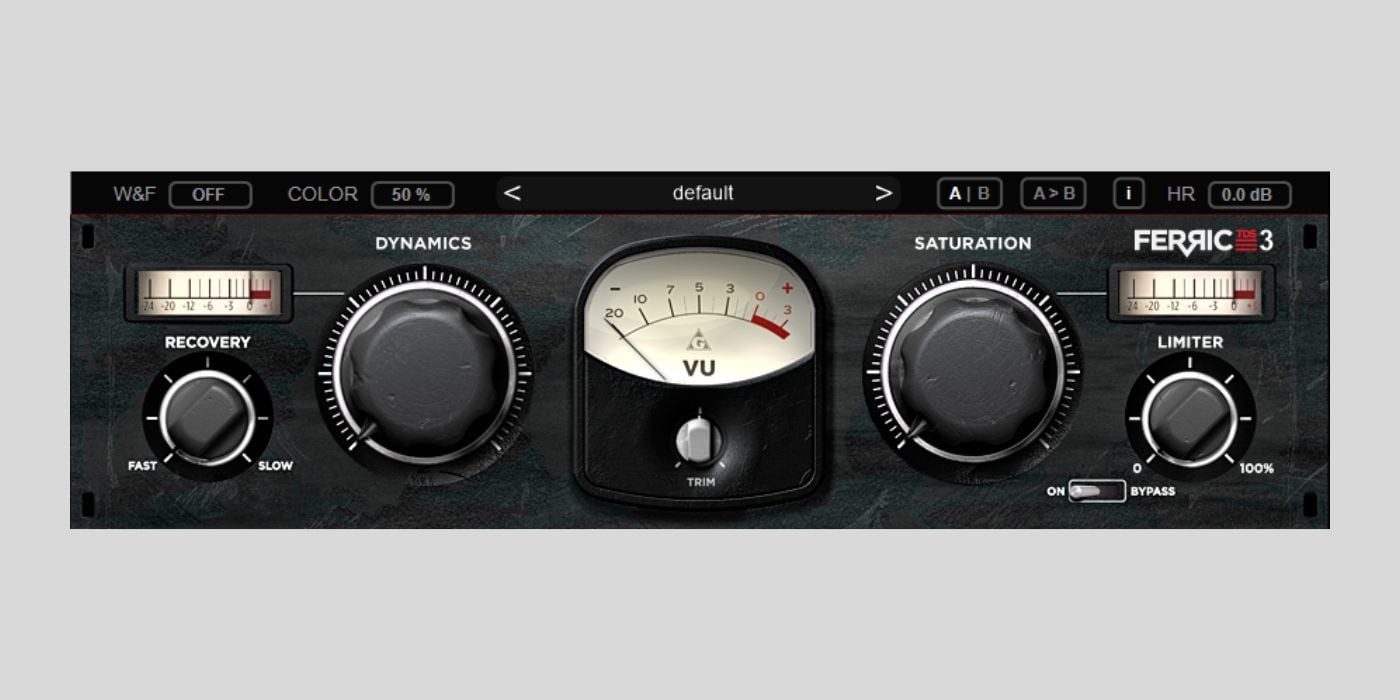
FerricTDS is my favorite tape saturation plugin and the main reason I keep a Windows laptop around. It combines tape-style compression, saturation, and limiting in one, for single tracks and buses.
DYNAMICS sets the compression and RECOVERY the release, SATURATION adds the drive, and LIMITER blends the curve from saturation toward straight limiting, keeping low levels cleaner at higher settings. New in mkIII are a preset manager with A/B switching, optional wow and flutter, a resizable interface, and COLOR, which switches an audio transformer into the path for a stronger low-end foundation and smoother highs.
It glues a drum bus by smoothly rounding transients rather than squashing them, and at conservative settings, it provides subtle mix-bus glue. If you push the wow and flutter, it gives you a bit of that vintage tape feel, but not enough to work as a lo-fi tool.
I usually set DYNAMICS and RECOVERY first, then SATURATION and LIMITER, with COLOR last; that transformer adds serious weight to bass and vocals. Also, when pushed hard, FerricTDS produces the best tape sound I’ve ever heard in a plugin.
We covered the mkIII release in December 2025, and version 3.0.1 has since fixed sluggish parameter changes. It’s Windows-only and requires the Microsoft Visual C++ 2022 runtime to be installed.
Runs on: Windows (VST, VST3)
What is free: the full plugin; no account; needs the Microsoft Visual C++ 2022 runtime
Download: FerricTDS mkIII
Phoenix LT by Shattered Glass Audio
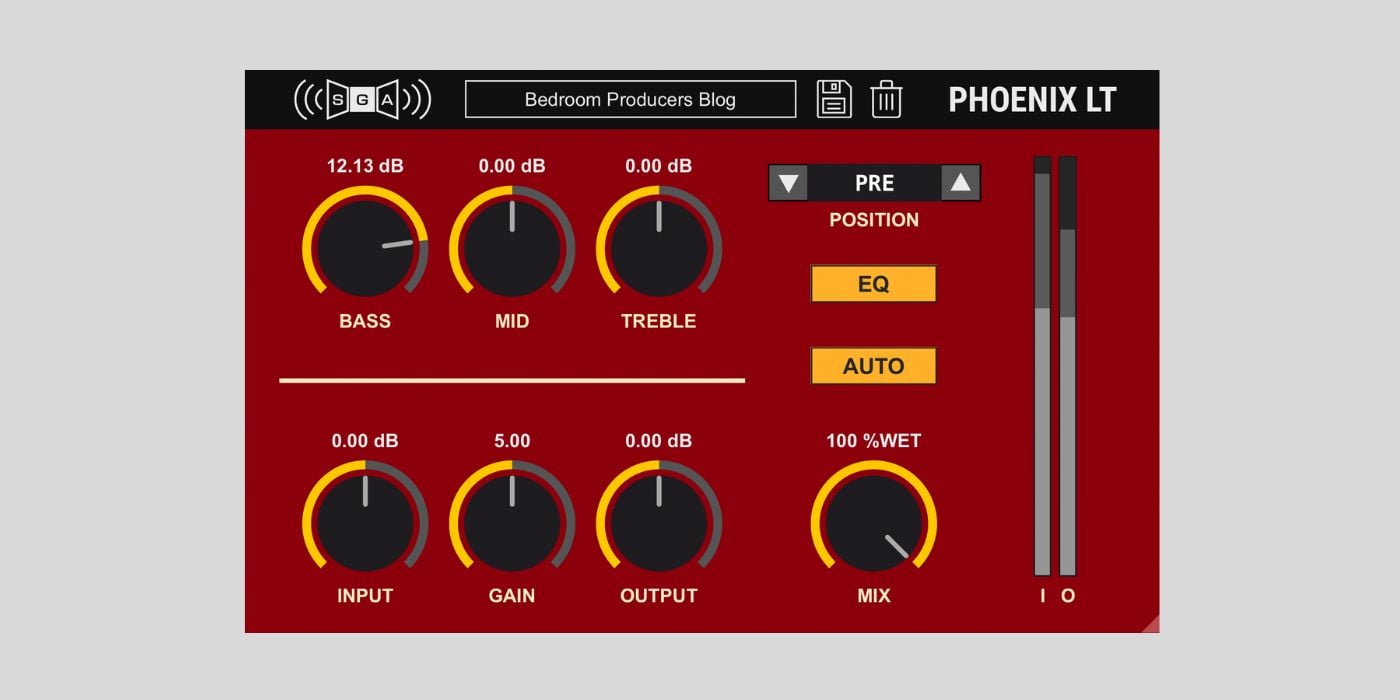
SGA1566, the free tube preamp I used for years before it was discontinued, finally has a successor. Phoenix LT is a real-time circuit simulation of a tube preamp with 12AU7 triodes, built on Shattered Glass Audio’s circuit simulator.
SGA1566’s one big drawback was its CPU load, and Shattered Glass Audio improved this a lot with Phoenix LT, which is surprisingly light on CPU. What matters even more to me is the added dry/wet mix control, which makes parallel tube saturation a breeze.
You also get a three-band Baxandall-style EQ that can sit before or after the preamp, auto-gain, and automatic 4x oversampling. It feels unusually polished for a free plugin, and even with the gain pushed hard, the saturation stays smooth and controlled.
Gentle drive with the EQ after the preamp suits vocals. On bass, the dry/wet control keeps the punch while adding tube warmth, and on drums you can push the drive or stack two instances.
There’s more detail in my Phoenix LT release post. It needs macOS 14 or Windows 11, so older computers are out.
Runs on: Windows 11, macOS 14 or later (VST3, AU, AAX), plus an iOS app
What is free: the full plugin; no account
Download: Phoenix LT
CHOW Tape by Chowdhury DSP

For detailed tape modeling, CHOW Tape goes deeper than anything else on this page. It’s a physical model of analog tape built around hysteresis, originally based on a Sony TC-260 recorder, and it started as a Stanford University research project.
Years later, it is still one of my top free tape recommendations when it comes to flexibility.
You choose which parts of tape recording it simulates: drive, saturation and bias for the nonlinear character, a loss section for the frequency-dependent effects of tape speed and the playback head, degrade, wow and flutter, and a tape compression stage. That means it works as a saturator, a lo-fi effect, or both, as I noted when I first covered it.
It is harder to learn than the simpler saturators here, and the bias and loss controls especially take some time to figure out. For subtle warmth, I’d keep drive and saturation low with wow and flutter off and add a little loss. For lo-fi, push drive and saturation, then add degrade, wow and flutter.
Unfortunately, there has been no new release since November 2023.
Runs on: Windows, macOS, Linux, iOS (VST, VST3, AU, AAX, CLAP, LV2, AUv3, standalone)
What is free: the full plugin (open source); no account
Download: CHOW Tape
GSatPlus by TBProAudio
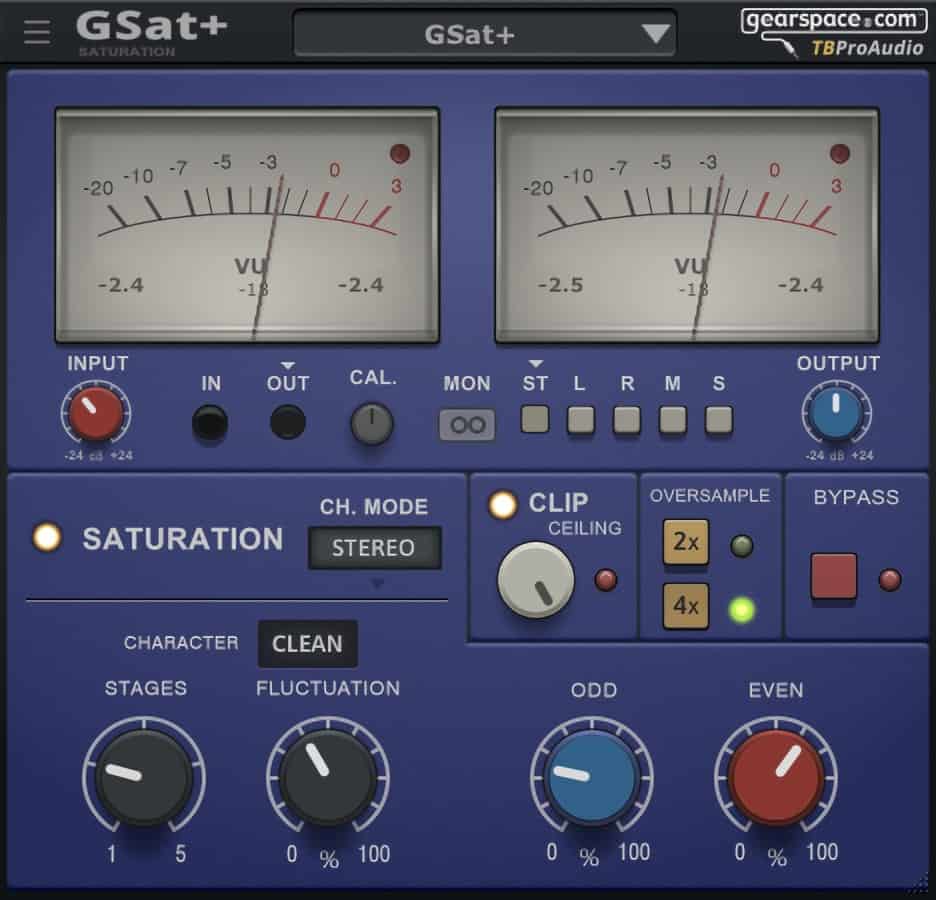
GSatPlus comes from the saturation module of TBProAudio’s CS5501 channel strip, and its best feature is the separate Odd and Even harmonic controls. Even harmonics add sweetness, odd harmonics add grit, and an even-only setting gives a smooth, transformer-style color.
Around that, you get four tube characters (clean, warm, crisp, classic), a Stages control, Fluctuation, a Mix knob, clip protection, and placement on stereo, left, right, mid, or side. Saturating only the sides in M/S mode is a handy trick on wide synths and stereo buses.
When James first covered it, he noted that it is lightweight enough that even an older system can run multiple instances. Also, if you encounter a bug where the interface doesn’t draw properly, the no-GPU build draws it on the CPU instead.
Oversampling adds latency and CPU overhead, so leave it off while recording.
Runs on: Windows, macOS (VST, VST3, AU, AAX)
What is free: the full plugin; no account
Download: GSatPlus
T-Saturator by Techivation

Most saturators react to how hard you hit them, but T-Saturator doesn’t. It is level-independent, meaning quiet and loud parts get the same amount of saturation, so the character stays consistent. I think it is one of the best free saturators right now if you want to work fast without worrying about levels.
The standout feature is Frequency Range, which limits the effect to, say, the highs of a vocal or the low mids of a bass.
Four modes cover Tube (the asymmetric response of triode tubes), Tape (driven magnetic tape), Clip (soft clipping), and Fold (a gentle wavefolder). Crunch sets the intensity, and Smash changes how much the transients get saturated; push it up to add bite to drum transients.
You also get mid/side and left/right processing, up to 8x oversampling, and auto gain. As we noted in our T-Saturator release post, a little goes a long way here because it quickly tips into heavy distortion. Save the 8x oversampling for the final mixdown, since it costs CPU.
Runs on: Windows, macOS (VST, VST3, AU, AAX)
What is free: the full plugin; free Techivation account required
Download: T-Saturator
TesslaPRO mkIV by Variety of Sound

Some plugins you hear the moment you add them, but TesslaPRO mkIV is one of those that you miss when you remove it. It’s very subtle, but I love using it across the mix for added warmth, and you can really hear the difference with and without it.
It’s transformer-style coloration that isn’t meant to sound distorted, and version 4 introduced a new transformer model based on hysteresis, as our TesslaPRO mkIV post covered.
The controls are BASS (a subsonic filter that increases or decreases the fundamentals), DRIVE, BOOST, and TRANSIENTS. Turning BASS down tightens the low end, and turning it up brings back weight. The effect is easiest to hear on stereo buses and across many tracks; mono sources show less of its depth.
It is latency-free and light on CPU, and readers voted it into the top 30 of BPB’s Readers’ Choice 2024.
Anyone expecting obvious drive should try the Tesla SE MkIII on the same download page, which adds a transformer Color control and a saturation/limiting curve for more edge. TesslaPRO is Windows only.
Runs on: Windows (VST, VST3)
What is free: the full plugin; no account; needs the Microsoft Visual C++ 2013 runtime
Download: TesslaPRO mkIV
ToTape9 by Airwindows
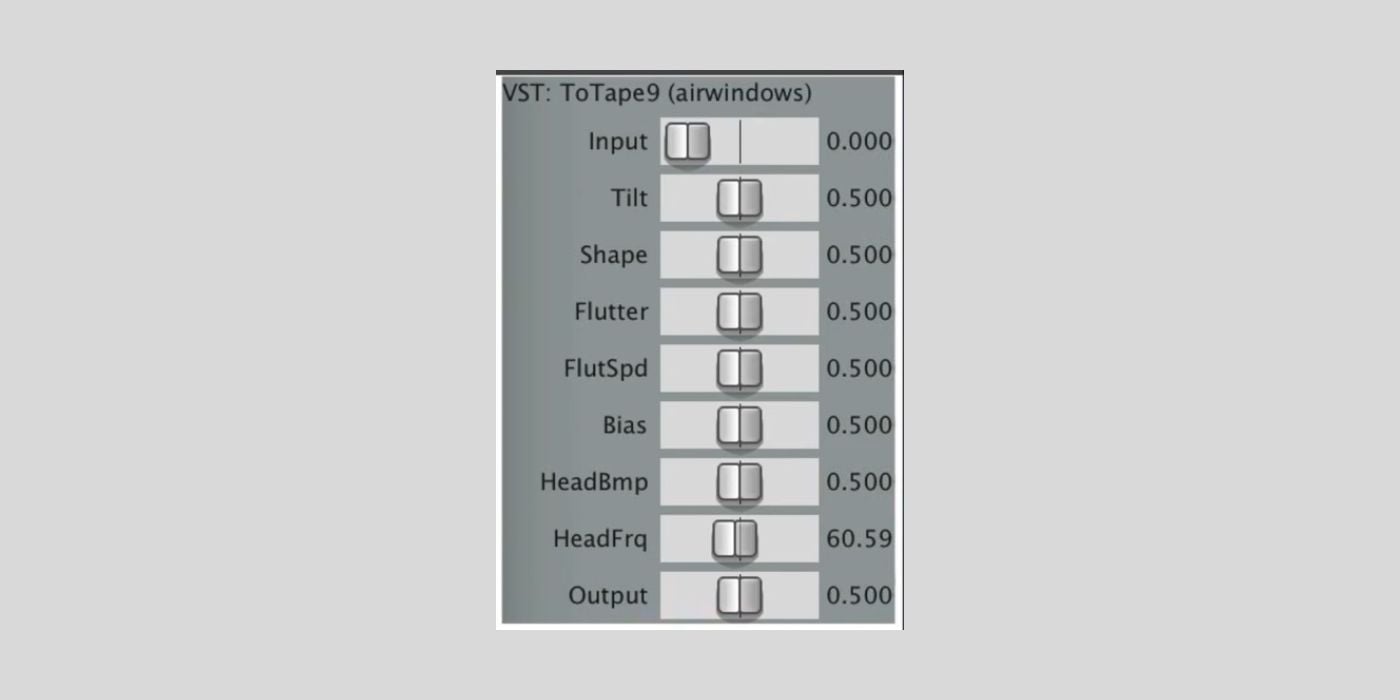
If you want to try one Airwindows tape plugin, start with ToTape9. It pairs tape emulation with brightness compression and replaces the older, simpler Tape as the first choice. Airwindows itself lists it in its Basic and Recommended collections.
The controls give you a lot of room for tweaking: Input, Tilt, Shape, Flutter and flutter speed, Bias, Head Bump and head bump frequency, and Output. There is no oversampling by design because the plugin handles intersample clipping without upsampling.
If you drive it harder, ToTape9 sounds smoother and bigger than the earlier ToTape versions, and ToTape5 and ToTape6 were already among my favorite Airwindows plugins. It works as a peak shaver and glue as much as a tape effect. The default head bump is too much for many mixes, so it is the first control I’d turn down if the low end gets woolly.
Like every Airwindows single plugin, there is no custom interface, just your host’s generic sliders. Airwindows Consolidated adds knobs and is the easier way in.
Runs on: Windows, macOS, Linux (VST, VST3, AU, CLAP, LV2)
What is free: everything (open source); no account
Download: ToTape9
Tube Saturator Vintage by Wave Arts
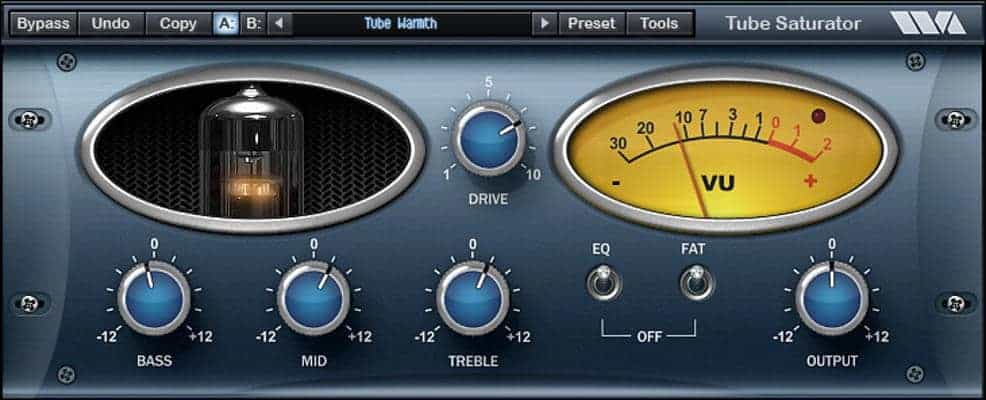
Wave Arts gave its original Tube Saturator away as a free reissue, and the sound is why I still keep it installed after all these years. Tube Saturator Vintage is a circuit simulation of two 12AX7 preamp stages with a bypassable three-band Baxandall EQ in front, and it is excellent.
The Drive knob raises the input while lowering the output, so the level jump stays under control, and FAT mode changes the first stage’s bias for more gain and saturation. For me, it really shines on acoustic drums, and FAT mode is most useful on bass. On vocals, keep the drive low.
There is no mix knob, so use a send for parallel drums. Wave Arts itself says the circuit simulation is very CPU intensive, so I’d keep it to a few important tracks or buses and freeze or render if the session struggles.
Runs on: Windows, macOS (VST, VST3, AU, AAX)
What is free: the full plugin; free serial after registering with a name and email
Download: Tube Saturator Vintage
Tube Amp by Voxengo
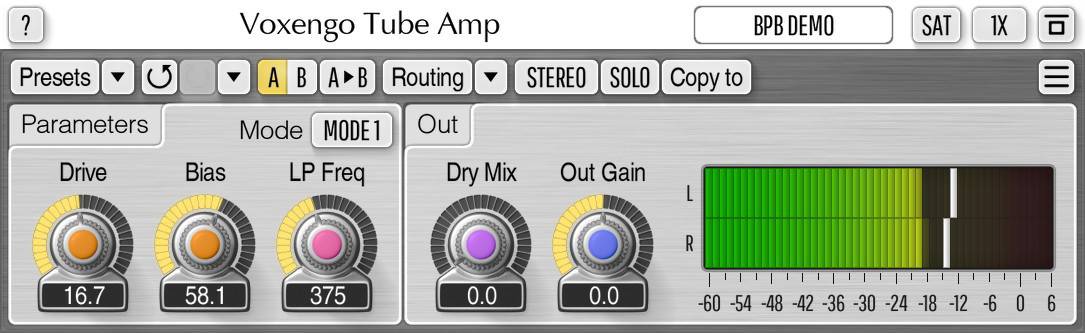
Despite the name, Tube Amp is an overdrive at heart. To me, it is Voxengo’s tube distortion box first and a gentle saturator second, though a low Drive setting does give you tube-style saturation.
Mode 1 provides moderate overdrive and adds gentle density at low Drive, while Mode 2 delivers guitar-style distortion that works well in parallel with drums or on bass, guitars, and synths. The low-pass filter tames the fizz that stronger settings create. Match the level with Out Gain, or the louder version will always seem better.
Runs on: Windows, macOS (VST, VST3, AU, AAX)
What is free: the full plugin; no account
Download: Tube Amp
LA-210 by Goodhertz
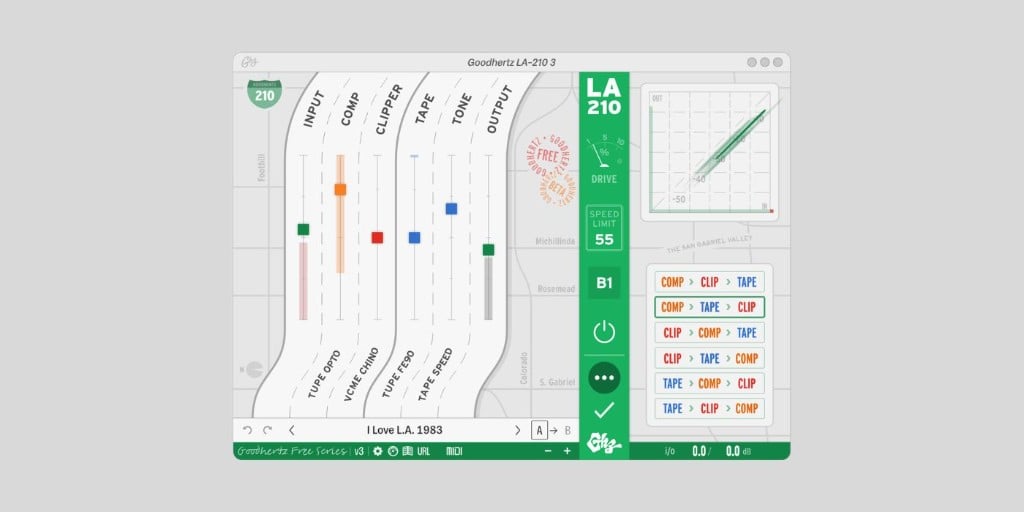
Goodhertz built LA-210 as a greatest-hits chain from three of its plugins: the opto compressor from Tupe, the Chino soft clip from VCME, and the FE90 cassette tape model from Tupe Wow, plus a brickwall limiter.
I’m a huge fan of Goodhertz plugins (the love affair started with the Wulf compressor), and this one is fast and a lot of fun, with great-sounding compression, dirt, and cassette color you can add in one move.
Each stage gets a single slider (Comp, Clip, and Tape), joined by Input, Tone, and Output. The interface is designed to look like a Southern California freeway map, and the Speed Limit switch (25, 65, or 99 mph) scales the overall processing, with 99 being the gnarliest.
Rearranging the stage order changes the sound more than small slider moves. You don’t get attack, release, or ratio controls, but the single sliders keep it fast.
I love this one on vocals and typically start with the compressor first, then tape, then clip, with Speed Limit at 25 and only a little Clip. The opto stage adds movement and body to vocals and sustained chords. It runs stereo only, so it loads as a stereo plugin even on a mono track.
It’s still in beta, and Goodhertz says it will stay free after the beta. I covered it in more detail in my LA-210 release post.
Runs on: Windows, macOS (VST, VST3, AU, AAX)
What is free: the full plugin (still in beta); free Goodhertz account required
Download: LA-210
Tape Cassette 2 by Caelum Audio
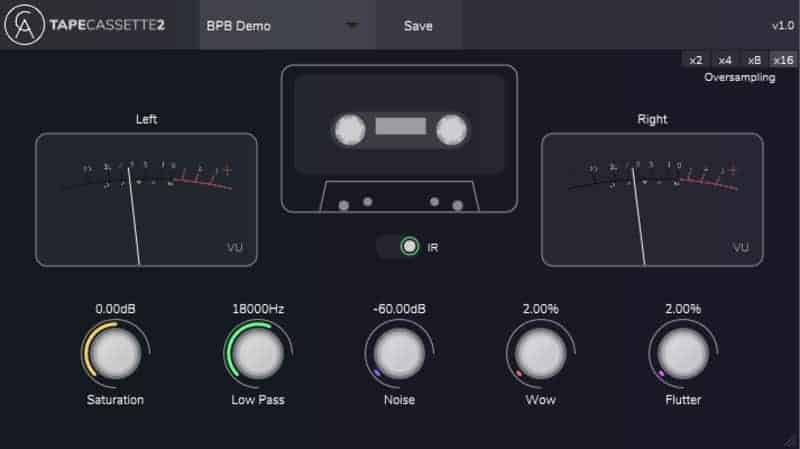
Tape Cassette 2 gives you a recognizable cassette texture instantly, but its saturation algorithm, with hysteresis and selectable oversampling, also makes it useful as a plain tape saturator. If you turn off the impulse response, noise, wow, and flutter, that is exactly what you get.
The lo-fi parts are a Type I cassette impulse response and sampled Type I tape noise, both adjustable and switchable, plus wow and flutter and a low-pass filter. The sampled noise sounds more convincing than generic hiss to me. There is only one cassette type, though, so you’re not getting a wide variety of flavors.
It is one of my favorites when I want obvious lo-fi, with audible distortion and wobbly pitch. Also, high oversampling settings get heavy on the CPU.
The download requires a free Caelum account, and you enter a license code at first launch.
Runs on: Windows, macOS, iOS (VST3, AU, AAX, AUv3)
What is free: the full plugin; free Caelum account and a license code at first launch
Download: Tape Cassette 2
BPB Saturator Plus by Bedroom Producers Blog

BPB Saturator Plus is last on purpose because it is our own plugin. It is also built around my personal taste in saturation, which explains why I reach for it so often.
The big addition over the original is the Mix knob, so parallel saturation finally happens inside the plugin.
Three modes cover Tube, Tape, and the new Diode. Diode is smoother and rounder than Tube, softer on the transients, and adds gentle harmonic weight to synths and bass. It is the gentlest starting point of the three.
High-pass and low-pass filters (20 Hz to 20 kHz) and input and output gain handle the shaping. On drums, use Mix for parallel drive and the low-pass filter to stop the cymbals from fizzing.
Also, the Tape mode is a saturation flavor, not a tape machine, so there is intentionally no wow, flutter, or hiss. It’s all about gentle tape-style saturation and compression.
The formats are VST3 and AU, available on Windows and macOS.
Runs on: Windows, macOS (VST3, AU)
What is free: the full plugin; pay what you want, from $0
Download: BPB Saturator Plus
More free saturation plugins worth a look
- TapeLite by HoRNet: tape saturation modeled on the Otari MX80 multitrack machine, with 15 and 30 IPS modes, Bias and Mix, and no hiss. The 15 IPS mode sounds thicker to me. Free with a HoRNet account; Windows and macOS.
- FreeAMP by Klevgrand: tape and tube saturation from REAMP, reduced to Drive, Mix, and Output. It isn’t overly harsh and shines on subtle processing, and the Mix knob suits parallel drums. Free Klevgrand account; Windows and macOS.
- PreBOX by Analog Obsession: 11 preamp models with auto gain compensation, filters, and 4x oversampling, from a tried-and-tested indie developer. Ships in the free Color Bundle with Distox; MidBoss and MoMa are separate freebies. Direct download from a Patreon post, no account; Windows and macOS.
- Heatwave by Slate Digital: one Drive knob blending saturation with EQ, transient shaping, and compression, plus a Clip stage. I expected a simple one-knob saturator and was surprised by its musicality, especially on drums. Needs a Slate Digital account and iLok; Windows and macOS.
- BPB Bassaturator by Bedroom Producers Blog: our free bass plugin, with a push-pull sub boost plus Dirt, Body and Tape saturation, a low-pass filter and Mix. Dirt tends to work better on bass guitar, and I love how Tape sounds on synth bass. Windows and macOS.
- TapeMachine 2 by Dusk Audio: open-source tape emulation with two machines, four tape formulations, four speeds, and separate wow and flutter. No sign-up; Windows, macOS, and Linux. The Mac builds aren’t notarized, so macOS warns on first launch.
- puffer:fish by Sonible: one Puffiness knob and three characters, from Tinyfin’s subtle warmth to Spikeskin’s heavy distortion. Playful and visual rather than technical; I already have my go-to saturators, so it isn’t a daily reach for me. Free through a €0 checkout with an email; Windows and macOS.
- Sucrose by UnplugRed and BlepFX: clean second and third harmonics and subharmonics without changing the dynamics, in 1, 4 or 16 bands, with zero latency. I love the concept; the Subharmonix option makes basses and kicks feel bigger. Open source, no account; Windows, macOS, and Linux.
Tape, tube, or transformer: which saturation to use
Tape saturation is my favorite type of processing on drums. It works like soft compression that rounds off transients, with a gentle high-frequency loss that grows with drive and a low-frequency head bump that depends on tape speed. It works exceptionally well on drum buses, bass, bright or harsh vocals, and the mix bus. FerricTDS mkIII, CHOW Tape, ToTape9, Tape Cassette 2 (cassette), and the tape stage in LA-210 cover it.
Tube stages are asymmetric, so triode-style drive mostly adds second-order (even) harmonics, which read as warmth and body. Push harder, and you get more odd harmonics, more edge and thicker mids. Tube suits vocals, bass, guitars, and synths. Phoenix LT, Tube Saturator Vintage, Tube Amp, GSatPlus’s tube characters, and the Tube mode in BPB Saturator Plus are the options here.
Transformer saturation is strongest in the lows, adding weight or tightness down there, subtle per instance and cumulative across many tracks. TesslaPRO mkIV is the pure example, and FerricTDS’s COLOR control switches a transformer into its path.
Diode and clipping circuits do stronger waveshaping, shaving peaks directly and adding more odd harmonics. The Diode mode in BPB Saturator Plus is the smoothest of its three modes, and T-Saturator’s Clip and Fold modes cover soft clipping and wavefolding. Treat the even/odd rule as a starting point, because the circuit, level, and frequency all affect the balance.
For vocals, before any saturation, make sure to de-ess and clean up with EQ first. Also, always start with low drive, then match levels because saturation makes things louder, and louder tends to sound better. Tape smooths the top of a bright vocal, tube adds body to a thin one, and for heavy grit, saturate a parallel copy and filter its top end. My own vocal picks for processing vocals are IVGI and LA-210.
For more free effects, head back to the Free VST Plugins hub, or jump to the guides for free distortion plugins, free clipper plugins, free compressor plugins and free bitcrusher plugins.
FerricTDS mkIII, Phoenix LT, ToTape9 and BPB Saturator Plus replaced older versions or discontinued plugins, and T-Saturator, TesslaPRO mkIV and LA-210 were added. Szechuan Saturator, TubeDriver, AdHd Leveling Tool and XPressor were removed, FreeAMP moved to the short list, and Saturation Knob moved up to second behind IVGI, which stays the top pick.
