


I tested hundreds of free music production applications and reviewed the best ones in this article.
Music production software (also called music-making software) covers everything you need to make music on a computer. That includes a DAW for recording and arranging, an audio editor for cleaning up recordings, virtual instruments and effects, and a few utility tools for analysis. If you’re just getting started in 2026, the number of options out there is ridiculous. This guide cuts it down to what actually matters.
Everything below is completely free. No hidden costs, no trial periods, no features locked behind a paywall. I tested each application on my Windows laptop and MacBook Air to make sure it works reliably.
If you want a quick answer: download Waveform Free for a full-featured DAW that works on any platform, grab Komplete Start for instruments and effects, and install Voxengo SPAN and Youlean Loudness Meter for mixing and mastering analysis. That’s enough to start producing music today.
Quick picks
- Best overall free music production software: Waveform Free
- Best for Mac beginners: GarageBand
- Best for Windows: Cakewalk Sonar
- Best for analog-style recording: LUNA
- Best for beat-making (MIDI only): LMMS
- Best free audio editor: Audacity
- Best free plugin bundle: Komplete Start
Free music production software comparison
| Software | Type | OS | Best for | Plugin support |
|---|---|---|---|---|
| Waveform Free | DAW | Win / Mac / Linux | Cross-platform, no limits | VST, VST3, AU |
| LUNA | DAW | Win / Mac | Analog-style recording | AU (Mac), VST3 (Win) |
| GarageBand | DAW | Mac / iOS | Apple beginners | AU only |
| LMMS | DAW (MIDI only) | Win / Mac / Linux | Electronic, chiptune | VST (no VST3) |
| Cakewalk Next | DAW | Win / Mac | Beginners, songwriting | VST, AU |
| Cakewalk Sonar | DAW | Windows only | Windows power users | VST, VST3 |
| Audacity | Audio editor | Win / Mac / Linux | Podcasting, sample editing | VST, LADSPA |
| Ocenaudio | Audio editor | Win / Mac / Linux | Quick single-file edits | VST |
| Komplete Start | Instruments & effects | Win / Mac | Sounds, instruments | VST, AU, AAX |
| MFreeFXBundle | Effects | Win / Mac | Mixing, mastering FX | VST, VST3, AU, AAX |
| Kilohearts Essentials | Effects | Win / Mac | Simple, focused FX | VST, VST3, AU, AAX |
| Voxengo SPAN | Utility | Win / Mac | Spectrum analysis | VST, AU, AAX |
| Youlean Loudness Meter | Utility | Win / Mac | Loudness metering | VST, AU, AAX |
| ASIO4ALL | Utility | Windows only | Latency reduction | N/A (driver) |
Which free music production software should you choose?
If you’re a complete beginner on Mac: Start with GarageBand. It’s already on your computer, and the learning curve is gentle. Once you outgrow it, your projects transfer directly to Logic Pro.
If you’re a complete beginner on Windows: Download Waveform Free. It has no track limits, supports all major plugin formats, and works offline. If you prefer something simpler, try Cakewalk Next. If you want a traditional pro DAW layout, go with Cakewalk Sonar.
If you want to make beats and electronic music: Waveform Free or LMMS. LMMS has a workflow similar to FL Studio and is great for MIDI-based production, but it can’t record audio. If you need to record vocals or instruments too, go with Waveform Free.
If you need to record vocals or live instruments: Waveform Free or LUNA. LUNA has a particularly smooth recording workflow with built-in analog emulation, though it works best on Mac.
If you need instruments and effects: Download Komplete Start for instruments and MFreeFXBundle for effects. Between the two, you’ll have thousands of sounds and 38 effect plugins.
If you just need audio editing: Audacity for detailed multitrack editing, or Ocenaudio if you want something faster and simpler for single-file work.
Free digital audio workstations
A digital audio workstation (DAW) is where you record, edit, arrange, mix, and export your music. Your recordings, virtual instruments, effects, and samples all live inside it. Picking the right one matters more than any plugin or piece of gear.
For a deeper comparison of free DAWs with detailed testing notes, see our best free DAWs page.
Waveform Free

Waveform Free is a fully featured DAW for Windows, macOS, Linux, and Raspberry Pi. Unlimited audio and MIDI tracks, full plugin support (VST, VST3, AU), no restrictions on exporting or commercial use. Version 13.5 shipped in August 2025 with noticeable performance improvements.
It’s based on the commercial version of Tracktion’s Waveform, but the free edition doesn’t feel stripped down. I use it regularly for testing plugins and putting together quick demos, and it handles large sessions without issues.
The main drawback is the interface. But it’s also an advantage for some users.
The thing is, Waveform Free doesn’t follow the typical “mixer at the bottom, timeline on top” layout that most DAWs use. Everything lives in a single-panel view.
I found it disorienting at first because I was coming from Studio One, but after a week, it clicked. If you’re brand new to DAWs, you won’t have that problem because you won’t have habits to unlearn.
Overall, I think Waveform Free is the best free DAW for most people. It’s the only serious free DAW that runs natively on Windows, Mac, and Linux with full plugin support and no track limits.
Download: Waveform Free
LUNA
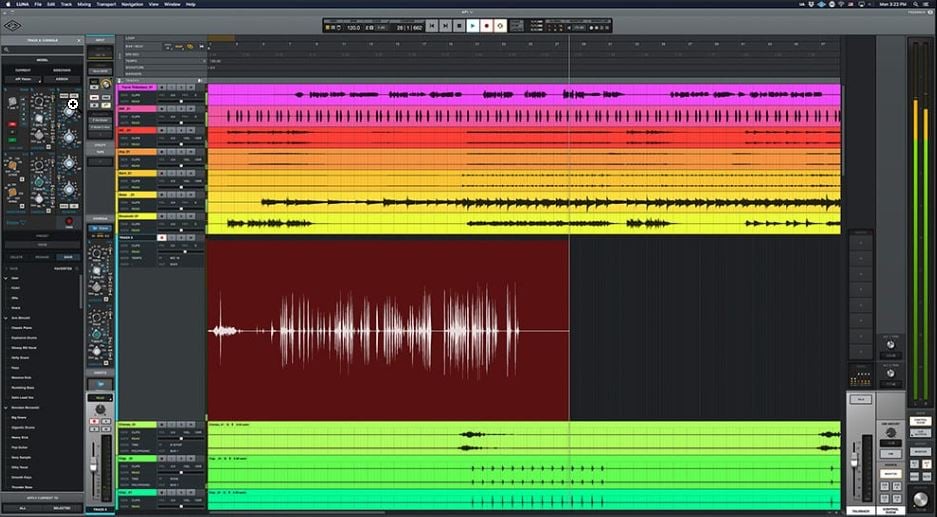
LUNA is Universal Audio’s free DAW for macOS and Windows. The free version gives you unlimited tracks, analog-style console summing, tape emulation, and built-in channel strips. Version 1.8 added Bounce in Place and Track Presets.
The recording experience is where LUNA really shines. The tape emulation and analog summing add warmth to your tracks without needing extra plugins. If you want that classic studio sound straight out of the box, this is the DAW to try.
On Mac, LUNA runs smoothly, and I have no complaints. On Windows, it’s a different story. Users on Reddit and YouTube consistently report crashes, slow plugin loading, and graphics issues. UA keeps improving it, but as of early 2026, the Windows version still isn’t as reliable. LUNA also only supports AU plugins on Mac and VST3 on Windows, which can be limiting.
My recommendation: if you’re on Mac and want a recording-focused DAW, LUNA is excellent. On Windows, test it before committing.
Download: LUNA
GarageBand
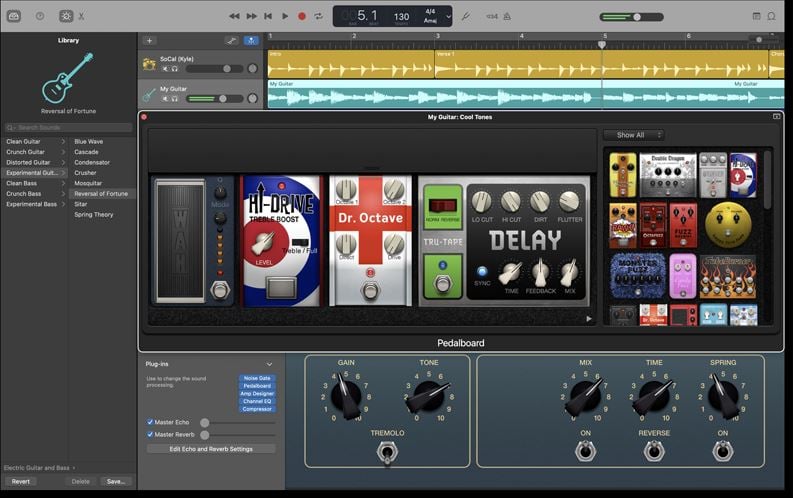
GarageBand comes preinstalled on every Mac, iPad, and iPhone. If you’ve never opened a DAW before, this is the easiest place to start.
The drag-and-drop workflow and built-in loops make it possible to put a song together in minutes. I recommend spending a few days in GarageBand to learn how tracks, instruments, and effects work, then moving to Waveform Free or Logic Pro when you feel ready for more control.
The biggest limitation is AU-only plugin support, so you can’t load VST instruments or effects. The mixing tools are basic, too. And it’s Apple-only, obviously.
One nice thing: GarageBand projects open directly in Logic Pro, so nothing you make is wasted if you upgrade later.
Download: GarageBand
LMMS
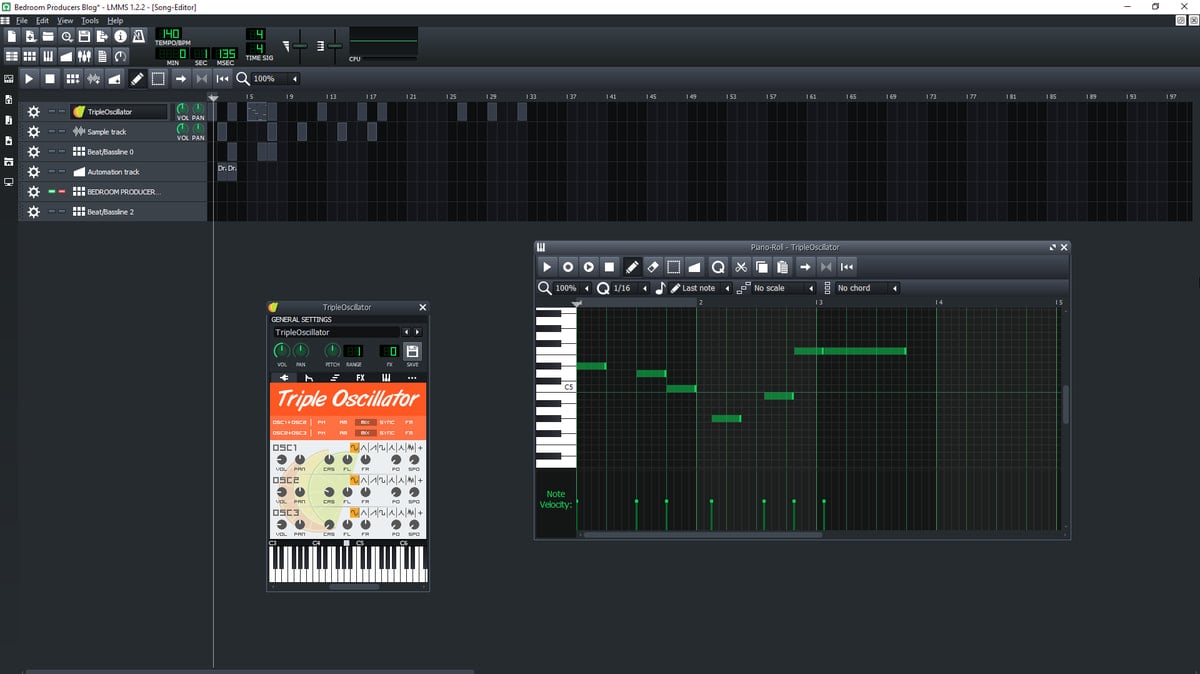
LMMS is a free, open-source DAW with over 2 million active users. It runs on Windows, macOS, and Linux, requires no account or activation, and has no track limits.
The workflow is closest to FL Studio among free DAWs, which makes it popular with electronic and chiptune producers. It comes with 16 built-in synthesizers (including emulations of the Roland TB-303 and Commodore 64 SID chip), a beat sequencer, and a piano roll editor. For MIDI-based production, it’s surprisingly capable.
The big limitation is that LMMS cannot record audio. It’s a MIDI sequencer only. If you need to record vocals, guitar, or any live instrument, you’ll need a different DAW or a separate tool like Audacity alongside it. LMMS also doesn’t support VST3 plugins, which is becoming a real issue as more developers drop VST2.
I’d recommend LMMS if you’re primarily making beats, electronic music, or chiptune and don’t need audio recording. For anything else, Waveform Free is a better starting point.
Download: LMMS
Cakewalk Next (by BandLab)
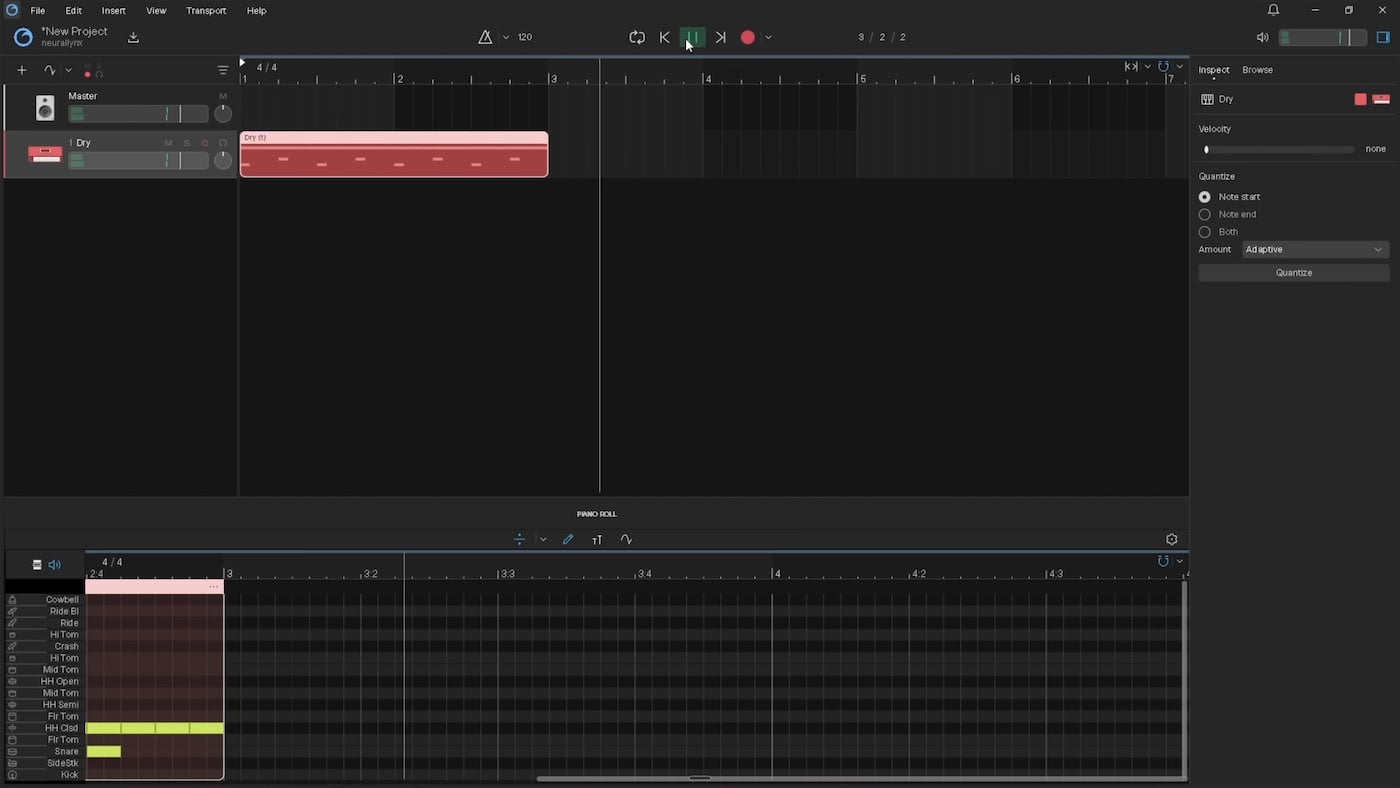
Cakewalk Next is the lightweight DAW from BandLab, available for both Mac and Windows. It’s designed as a simpler, more approachable alternative to Cakewalk Sonar (listed below), and focuses on song creation rather than deep mixing and mastering.
The free version supports AU and VST plugins, includes built-in instruments and a sampler, and connects to BandLab’s royalty-free sound library. There’s also a lyrics tool and song templates to help you get started quickly. For beginners who want a desktop DAW that doesn’t overwhelm them with options, it’s a solid pick.
If you don’t want to install anything at all, BandLab also has a browser-based DAW at bandlab.com that works on any device, including phones. It’s more limited (no plugin support, internet required, and users have reported data loss), but it’s the fastest way to try music production with zero setup.
BandLab’s mobile apps on iOS and Android are handy for sketching ideas on the go, too.
One thing to watch: BandLab has been moving features behind a $14.95/month membership across all its products. The free tiers are still usable, but the trend is worth knowing about.
Download: Cakewalk Next | BandLab (browser/mobile)
Cakewalk Sonar

Cakewalk Sonar launched a new free tier in June 2025, replacing the older Cakewalk by BandLab (which stopped accepting new activations in September 2025). The free version includes unlimited audio, MIDI, and instrument tracks, the ProChannel mixing strip, AudioSnap, and ARA plugin support.
For Windows users who want a traditional DAW layout, Sonar is the strongest free option. The interface follows the familiar “timeline on top, mixer at the bottom” design that most DAW users expect.
I also noticed that it runs about 50% faster than the old Cakewalk by BandLab, which is very welcome when working with multiple plugins. You also get proper 4K display scaling and full VST2/VST3 support.
The free tier does have some limitations: one arranger track, no plugin oversampling, and no included sound packs. You also need a BandLab account to activate it, and it’s unclear whether more features will move behind the paid tier over time.
If you’re on Windows and find Waveform Free’s interface too unconventional, Cakewalk Sonar is the alternative I’d recommend.
It’s Windows-only, though. Mac users looking for something from the same family should check out Cakewalk Next (listed above).
Download: Cakewalk Sonar
Free audio editing software
Audio editors are not DAWs. They’re built for working with individual audio files: cutting, trimming, cleaning up, applying effects, and exporting. If you need to edit a podcast, process a vocal sample, or normalize a batch of files, these are the right tools.
Audacity
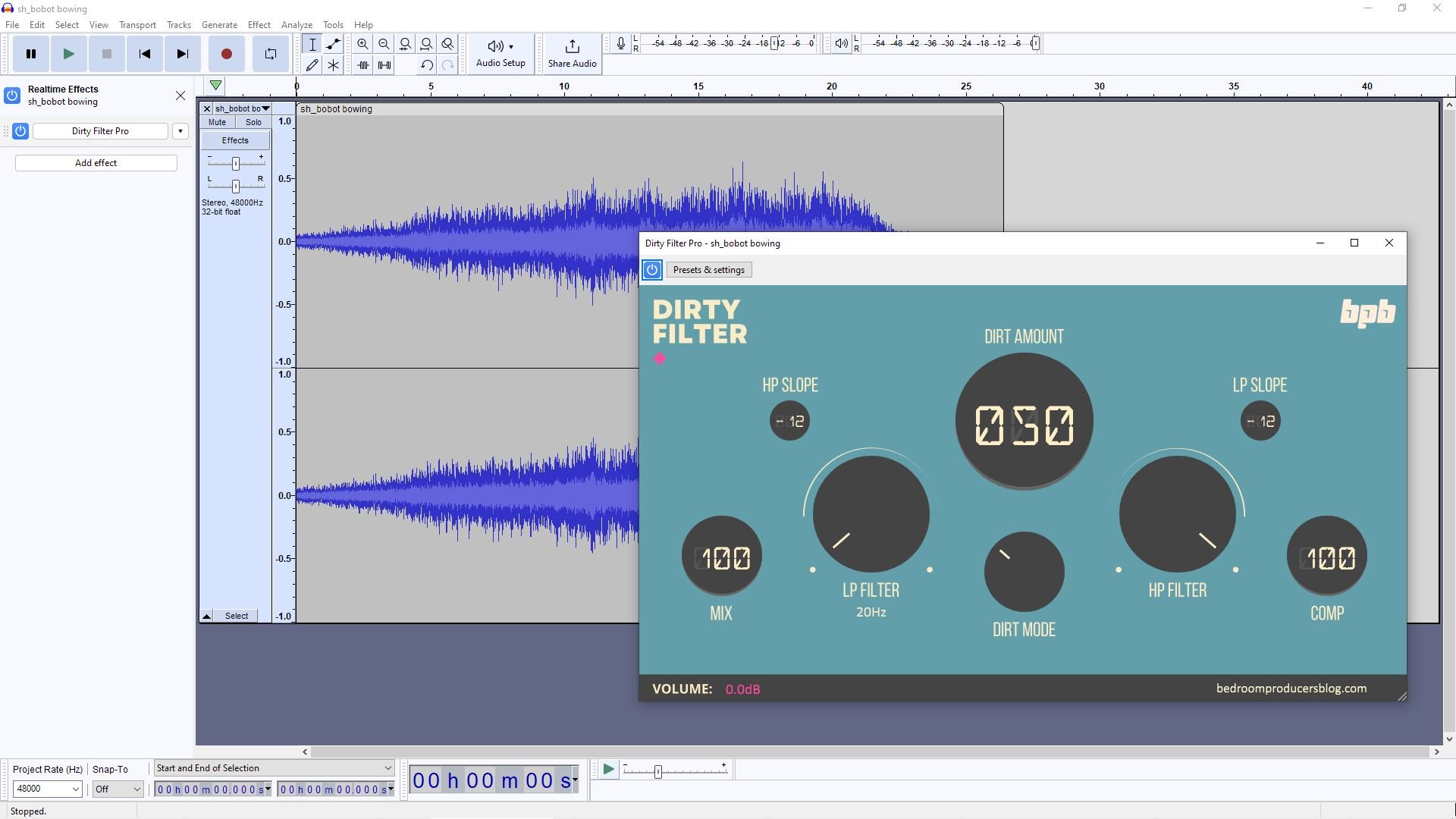
Audacity has over 100 million users, making it by far the most popular free audio editor. It runs on Windows, macOS, and Linux, supports audio up to 32-bit/384kHz, and handles multitrack editing.
Version 3.6 was a big update. It added a master effects bus, a new compressor and limiter, and visual themes that finally make the interface look less like it’s from 2003. Real-time non-destructive effects and tempo-based beat grids also showed up in recent versions.
I reach for Audacity whenever I need to quickly edit a recording, clean up noise, or chop samples. It supports VST and LADSPA plugins, and the community is so large that there’s a tutorial for practically anything you’d want to do with it.
It’s not a DAW, though. You can’t use virtual instruments, and the workflow isn’t built for composing or arranging. Use it alongside your DAW, not instead of one.
Download: Audacity
Ocenaudio
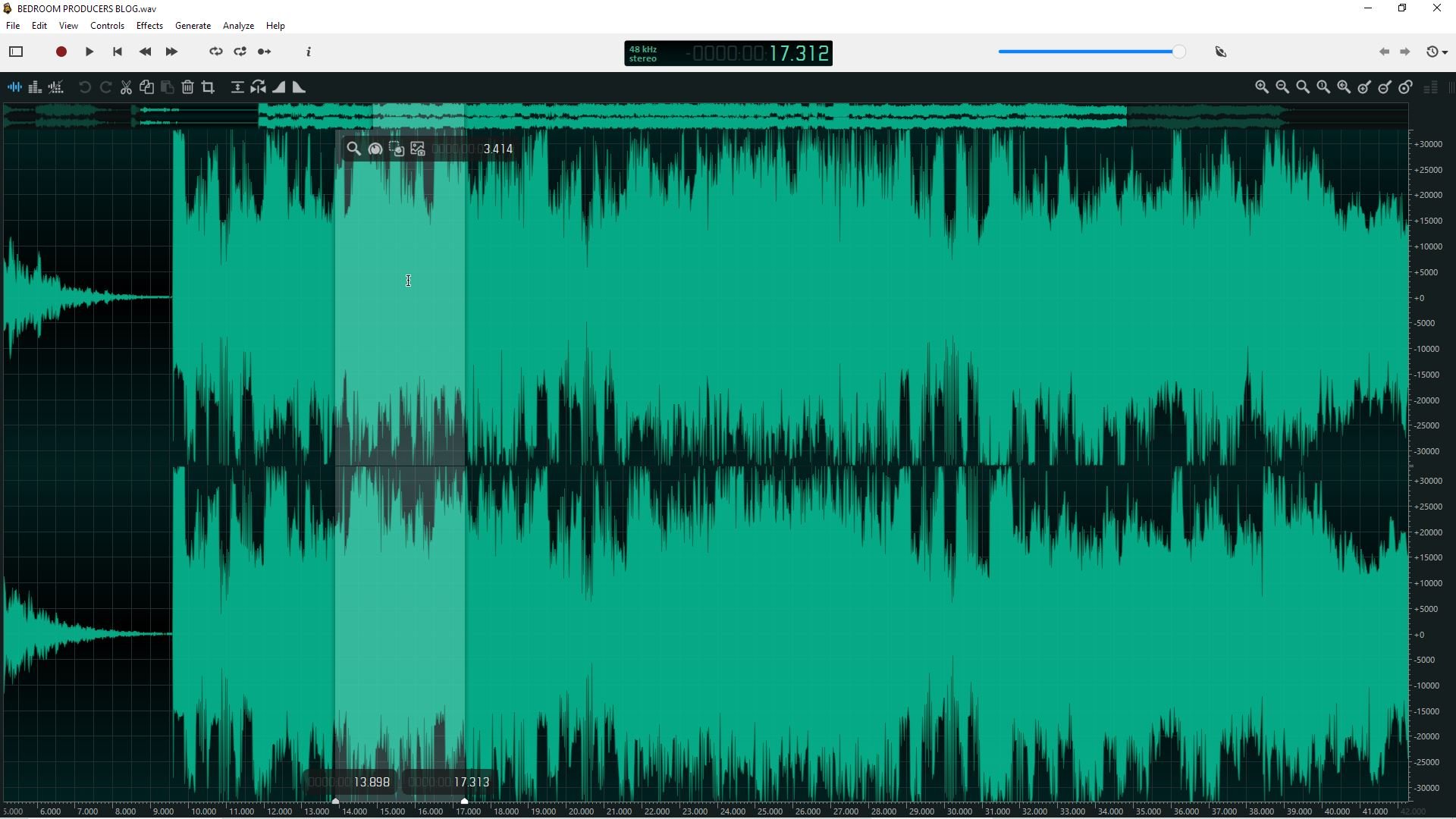
Ocenaudio is a free audio editor that I prefer over Audacity for quick, single-file work. The interface is cleaner, zooming and navigating are faster, and it opens large files almost instantly.
I use Ocenaudio as the last step in my sound design process. When I need to double-check a sound, trim the edges, or normalize a batch of files, it’s faster than loading up Audacity. The real-time effect preview is particularly useful because you can hear exactly what a filter or EQ change will sound like before committing to it.
The batch-processing feature is another reason I keep it installed. You can process entire folders at once, for example, normalizing dozens of audio files to the same volume level. That saves a lot of time when preparing sample packs or podcast episodes.
Ocenaudio only handles single-track editing, so it’s not a replacement for Audacity if you need multitrack work. It also only supports VST2 plugins (no VST3). But for its intended purpose, fast and clean single-file editing, it’s excellent.
Download: Ocenaudio
Free instruments and effects
A DAW gives you the workspace, but you still need sounds. These free bundles give you instruments, synthesizers, and audio effects that load into any DAW. I’d grab all three if you’re starting out. They cover different ground and work well together.
For hundreds more free plugins across every category, visit our free VST plugins page.
Komplete Start
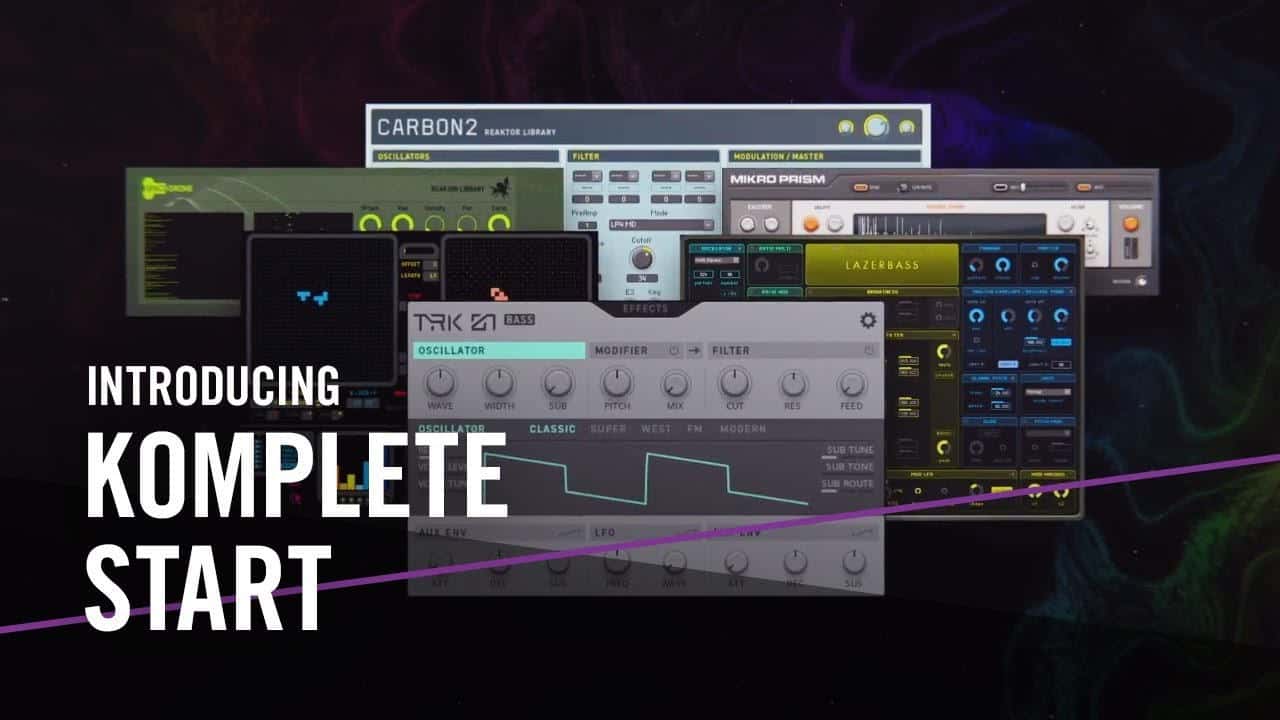
Komplete Start is Native Instruments’ free bundle: over 2,000 sounds, 16 instruments, and several effects. It includes the Kontakt Player, Reaktor Player, and Massive X Player, plus sampled pianos, drums, strings, an Irish harp, and more.
I love the variety here. Vintage analog synth tones from Analog Dreams, acoustic instruments, cinematic textures, all in one package. The sound quality is excellent because it’s all based on NI’s commercial products.
You also get the RAUM reverb and the mastering EQ from iZotope’s Ozone collection, both of which I use regularly. And the included Kontakt Player opens the door to dozens of free Kontakt libraries from other developers.
The downsides: the download is huge, and the Native Access installer is slow and clunky. It also takes a while to figure out how Kontakt Player, Komplete Kontrol, and the individual instruments all relate to each other. Once you get past the setup, though, the sounds are worth it.
Komplete Start runs on Windows and Mac but doesn’t support Linux.
Download: Komplete Start
MFreeFXBundle

MFreeFXBundle by MeldaProduction packs 38 free audio effects plugins into a single installer. EQ, compression, reverb, delay, distortion, stereo tools, frequency analysis, ring modulation, bitcrushing — it’s all in there.
What I like most about MeldaProduction’s plugins is the modulation system. Most of their effects let you modulate parameters with built-in LFOs and followers, which gives you creative options that stock DAW plugins don’t have.
The sound quality is the same as their paid plugins because it’s the same DSP engine underneath. The 2024 addition of MDelay (a dual-tap delay with customizable algorithms) made the collection even stronger.
The downside is the interface.
Every plugin has deep parameter menus, and the layout feels cluttered until you learn your way around. My advice: start with the equalizer, the compressor, and MAutoPitch. Explore the rest as you need them.
Download: MFreeFXBundle
Kilohearts Essentials

Kilohearts Essentials gives you 32 free audio effect plugins for Windows and macOS: EQ, reverb, compression, delay, distortion, saturation, chorus, a transient shaper, flanger, phaser, trance gate, tape stop, and more.
If MeldaProduction’s plugins are the deep end, Kilohearts is the shallow end (in a good way). Each plugin does one thing, with a clean interface and minimal controls. I use them for everyday mixing because they load instantly, use almost no CPU, and stay out of the way.
The plugins also work as “Snapins” inside Kilohearts’ modular hosts (Phase Plant, Snap Heap, and Multipass), which is where the real creative power lives. But even as standalone effects in any DAW, they’re solid and reliable.
There’s no catch. The Essentials collection is genuinely free with no time limit, no watermarking, and no locked features. Kilohearts keeps expanding it, too.
Download: Kilohearts Essentials
Free music production utilities
These handle specific jobs that your DAW and plugins don’t cover well on their own. I’d install a spectrum analyzer and a loudness meter from day one, even as a beginner. They help you understand what your music actually sounds like, and that speeds up the learning process more than any tutorial.
Voxengo SPAN
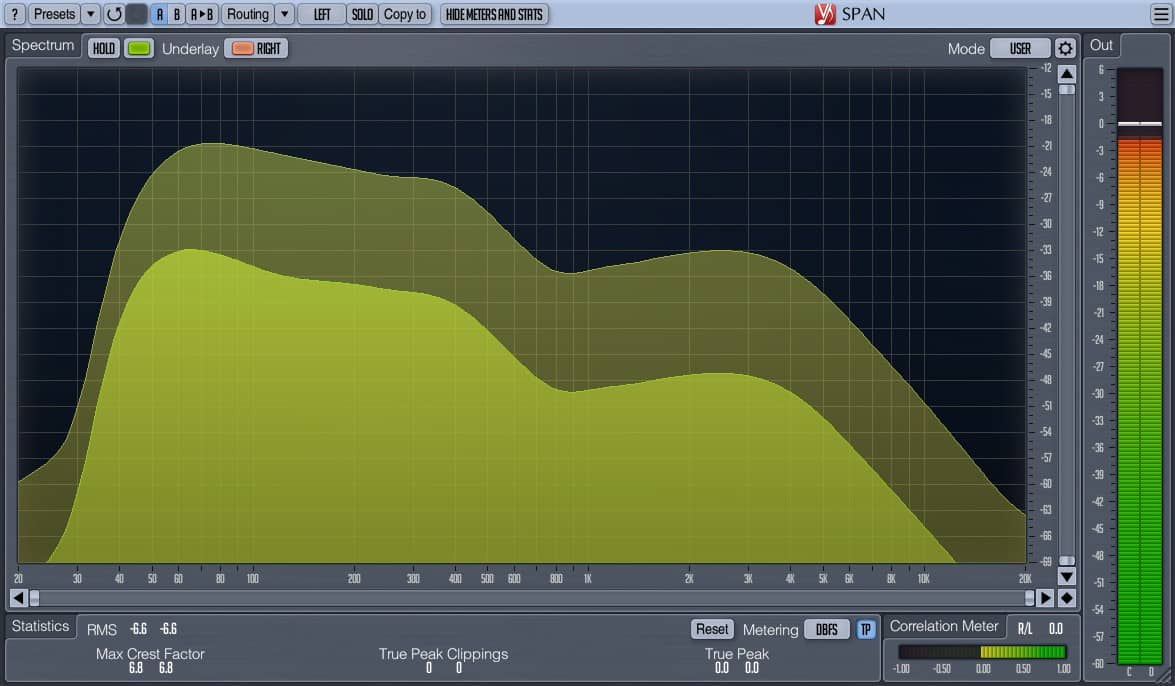
SPAN by Voxengo is the free spectrum analyzer that mastering engineers actually recommend. It shows you the frequency content of your audio in real time, with configurable FFT settings, stereo/mono/mid-side analysis, and EBU R128 metering.
The feature I use most is Ctrl+drag to solo a frequency range while listening. It’s a fast way to find problem frequencies in a mix. SPAN also does true peak detection, correlation metering, and surround formats up to 7.1.
The interface won’t win any design awards, but it’s functional and super customizable.
I keep SPAN on my master bus in every project. Having a visual reference for your frequency balance makes you a better mixer, period.
Download: Voxengo SPAN
Youlean Loudness Meter Free
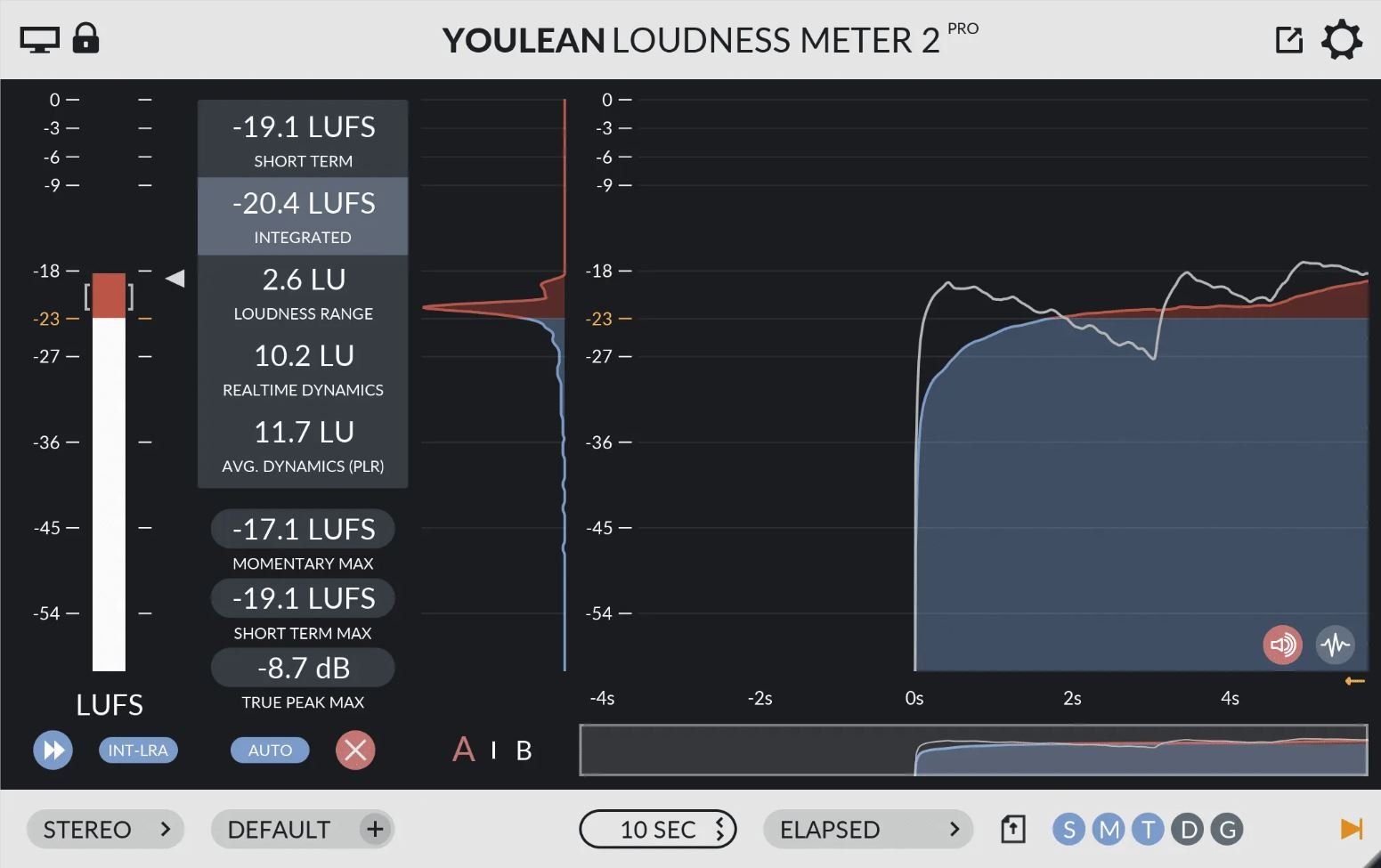
Youlean Loudness Meter measures LUFS (integrated, short-term, momentary), true peak levels, and loudness range. It includes presets for Spotify, YouTube, Netflix, and TV broadcast, so you can check your loudness target before uploading.
The free version is not a stripped-down demo. You get accurate measurements, real-time loudness graphs, and historical data. The interface is resizable and has a mini view for keeping it visible without eating up screen space.
If you’re putting music on streaming platforms, you need a loudness meter. Youlean is the best free option, and it’s not even close.
Download: Youlean Loudness Meter Free
ASIO4ALL
ASIO4ALL is a free audio driver for Windows that reduces latency when you don’t have a dedicated audio interface. If you’re using your laptop’s built-in sound card and getting noticeable delay when playing virtual instruments, ASIO4ALL can fix that.
Honestly, though, its relevance has faded. Windows’ built-in WASAPI driver (in exclusive mode) now handles low-latency audio well enough for many setups, and budget USB audio interfaces with native ASIO drivers start at around $50. Either option is better long-term.
I’d only install ASIO4ALL if you’re on Windows, don’t have an audio interface yet, and are experiencing latency problems. Mac users don’t need it at all because Core Audio handles low-latency playback natively.
Download: ASIO4ALL
How I selected the music-making software featured in this article
I started Bedroom Producers Blog in 2009 and have reviewed hundreds of free audio plugins and applications since then.
My goal for this page es simple: list the essential free software a beginner needs to start making music, without burying them in dozens of options they don’t need yet.
I tested each application on my Windows laptop and MacBook Air. I also read community feedback on Reddit, KVR, and YouTube to ensure my picks reflect what real users experience, not just what I encountered during testing.
Everything on this list is free. There are no hidden costs or trial periods. BandLab’s membership tier (which affects Cakewalk Next and Cakewalk Sonar) is the only exception, and I’ve noted it in those entries.
Frequently asked questions
What is music production software?
Music production software is any application used to create, record, edit, and produce music on a computer. The term covers digital audio workstations (DAWs) for recording and arranging, audio editors for processing recordings, virtual instruments and effects plugins, and utility tools like spectrum analyzers and loudness meters.
What is the best free music production software for beginners?
For most beginners, Waveform Free is the best starting point. It’s a full-featured DAW with unlimited tracks, cross-platform support (Windows, Mac, Linux), and full plugin compatibility. Mac users can also start with GarageBand, which is preinstalled and has the gentlest learning curve of any DAW.
Is free music production software good enough for professional use?
Yes. Free DAWs like Waveform Free and Cakewalk Sonar have no track limits and support professional plugin formats. Combined with free instruments from Komplete Start and effects from MFreeFXBundle, you can produce release-quality music without spending anything. The main limitations are workflow preferences and specific features, not sound quality.
What is the difference between a DAW and audio editing software?
A DAW (digital audio workstation) is designed for creating music from start to finish: recording, arranging multiple tracks, using virtual instruments, mixing, and exporting. Audio editing software like Audacity and Ocenaudio is built for working with individual audio files — cutting, trimming, cleaning up recordings, and applying effects. Most producers use both.
What is the best free music production software for Windows?
Waveform Free and Cakewalk Sonar are the two strongest free DAWs for Windows. Waveform Free offers a non-traditional but powerful single-panel interface with full plugin support. Cakewalk Sonar provides a more conventional DAW layout with unlimited tracks and the ProChannel mixing strip. Both support VST and VST3 plugins.
What is the best free music production software for Mac?
GarageBand is the easiest starting point since it’s preinstalled on every Mac. For more advanced production, LUNA offers an excellent analog-style recording experience on macOS, and Waveform Free provides full cross-platform flexibility with no limitations.
Visit our Free VST Plugins page for more freeware plugins and instruments. For a detailed comparison of free DAWs, see our best free DAWs guide.
This page was last updated by Tomislav Zlatic on March 24, 2026.
Tomislav Zlatic is the founder and editor-in-chief of Bedroom Producers Blog (BPB). Since starting BPB in 2009, he has tested and reviewed hundreds of VST plugins.