


It’s 2026, and free DAWs are better than ever. So I spent last week testing four of them to see which one I’d actually use for real projects.
One clearly stood out.
Waveform Free is my top pick for anyone who wants a real, full-featured DAW without spending money.
Here’s why it beat the competition.
Update: Responded to LUNA and Reaper reader suggestions.
What I Tested
I put four of the strongest free DAWs through the same workflow: recording audio, programming MIDI, loading third-party plugins, mixing a simple track, and exporting.
I also checked for deal-breakers like track limits, offline functionality, and platform support.
The contenders:
- Waveform Free (Windows, macOS, Linux)
- Cakewalk Sonar (Windows only)
- GarageBand (Mac only)
- BandLab (Browser-based)
All four are good. But Waveform Free won on flexibility.
Why Waveform Free Wins
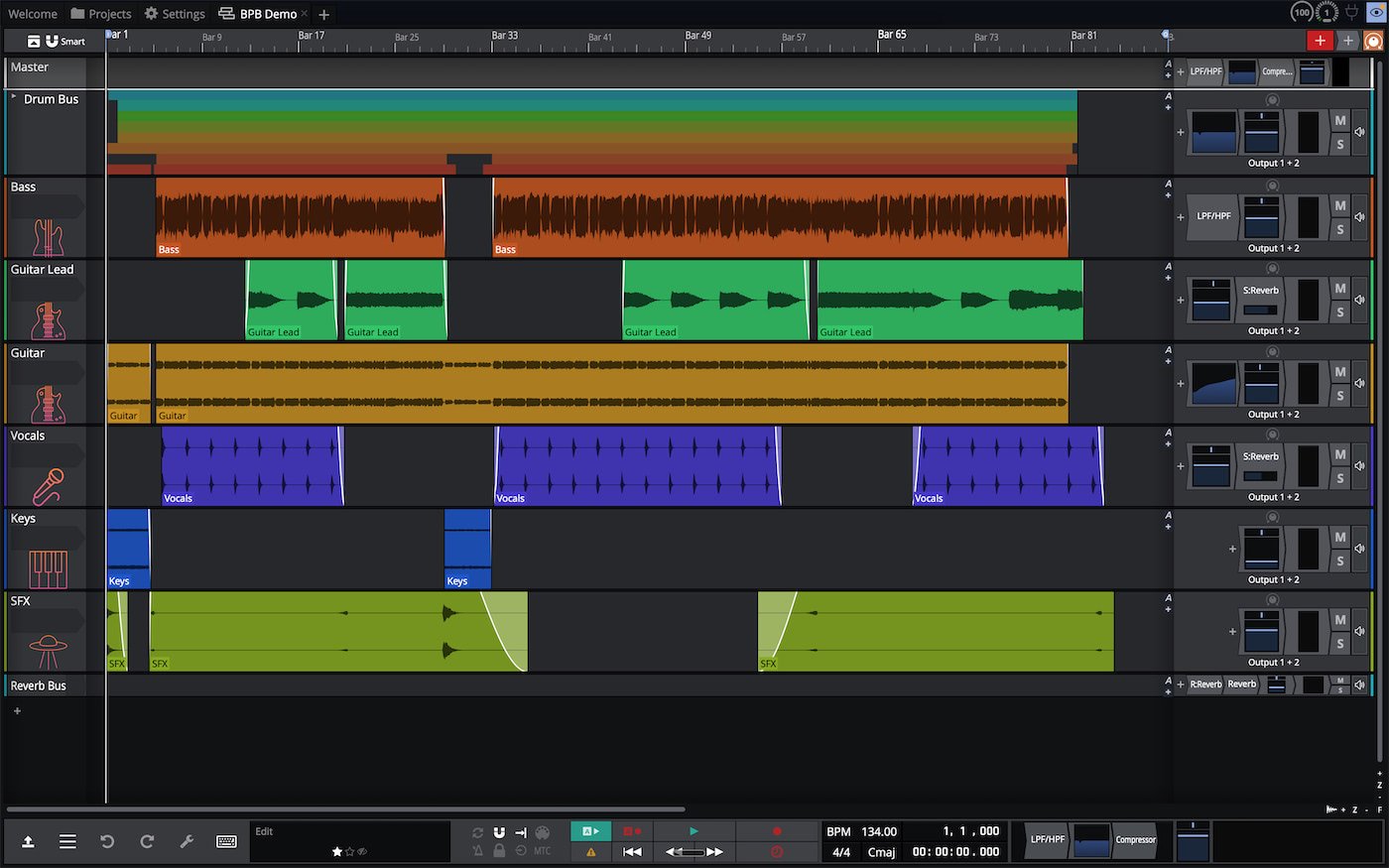
No track limits.
It feels like a paid DAW, not a “lite” version. Unlike Pro Tools Intro (capped at 8 audio tracks) or Ableton Live Lite (8 total), Waveform Free lets you build full arrangements without hitting a wall. This matters more than you’d think. Nothing kills momentum like realizing you need to bounce tracks just to add one more part.
It’s cross-platform.
Waveform Free runs on Windows, macOS, and Linux. Cakewalk Sonar is excellent, but Windows-only. GarageBand is a great starting point, but Mac-only. If you switch computers or collaborate with people on different systems, Waveform Free simply works.
Full plugin support.
It supports VST2, VST3, and AU (on Mac). You can use all those free plugins you’ve been collecting. BandLab doesn’t support third-party plugins at all, which quickly becomes limiting.
It works offline.
Unlike browser-based options, you’re not dependent on an internet connection. Your sessions will load and save just fine even if you’re not on WiFi.
It’s not perfect, though.
Waveform’s interface takes some adjustment. It doesn’t follow the traditional “mixer on the bottom, timeline on top” layout that most DAWs use.
Give it a week, and it clicks. But those first few sessions will feel unfamiliar.
The Close Second: Cakewalk Sonar
If you’re on Windows and don’t need cross-platform compatibility, Cakewalk Sonar is arguably just as capable. You get unlimited tracks, full VST support, and a traditional interface that feels more familiar.
However, there’s a catch. It’s Windows-only and requires a BandLab account to activate. Neither is a dealbreaker, but Waveform Free’s platform flexibility gives it the edge in my book.
Update: What About Reaper and LUNA?
Several readers asked why Reaper and Universal Audio’s LUNA aren’t on this list. These are fair questions, and here’s my reasoning.
Reaper
Reaper is fantastic. It’s one of the best DAWs available, and the $60 discounted license is insanely affordable. But it’s not free.
Yes, you can use the trial indefinitely. It doesn’t lock you out after 60 days.
But that’s still a trial of paid software, not a free product. The license agreement is clear: continued use requires purchase. I can’t in good conscience list “just use the trial forever” alongside DAWs that are actually free to use.
If you have $60 (or $225 for the commercial license), Reaper is an excellent investment. But this guide is specifically about free options, and Reaper doesn’t qualify.
LUNA
LUNA is super promising and improving rapidly. That said, I’m not ready to recommend it as a top free DAW for a few reasons:
MIDI workflow.
LUNA’s piano roll and MIDI editing tools still lag behind what you’d expect from a mature DAW. That’s fine if you’re only recording your voice and guitar. But if you’re doing any serious MIDI work, it’s far from perfect.
Windows stability.
LUNA on Windows 10 can be very rough, with occasional crashes, slow plugin loading, and graphics issues. It’s improving, but the Windows experience isn’t consistent yet, and I’m still considering it a Mac-first DAW.
For beginners, GarageBand is still the better Mac choice. GarageBand lets you make music right away with polished instruments and virtually zero hassle.
I’ll revisit LUNA in a future update. The development pace is encouraging, and it’s already great for tracking and mixing with an analog-console mindset. But for a “best free DAWs” recommendation right now (especially for beginners), I don’t think it’s quite there yet.
Quick Comparison
The Bottom Line
For a free DAW that doesn’t compromise on essential features like track count, plugin support, and cross-platform use, Waveform Free is the one to download.
The interface learning curve is real, but it’s a small price for free software that competes with paid options. I’ve used it for full projects on my M1 MacBook Air, not just demos, and I still use it while traveling.
If you’re on Windows and prefer a traditional DAW layout, Cakewalk Sonar is the alternative. Mac beginners should still start with GarageBand. It’s already on your computer, and the built-in sounds are excellent.
But for the best overall free DAW in 2026? I recommend Waveform Free all the way. It’s the closest thing to a “real” pro DAW you can get for $0.
Update: Added notes on Reaper and LUNA after reader suggestions.
Want the full breakdown? See my complete Best Free DAWs guide for all 10 options, including hardware-bundled DAWs like Ableton Live Lite and Cubase LE.
